TLDR
SS-31 is discussed as the tetrapeptide D-Arg-Dmt-Lys-Phe-NH2. This post covers sequence, bilayer and cardiolipin chemistry, and isolated-mitochondria models in the cited papers. Axovera Labs supplies SS-31 as a research material, not for human or veterinary use.
This article summarizes published scientific literature for laboratory-research context only. It is not medical advice, not a use protocol, and not a claim of safety or effectiveness in humans or animals. Axovera Labs products are sold strictly for in vitro and preclinical research and are not for human or veterinary use.
SS-31 appears in the literature as a mitochondria-targeted aromatic-cationic tetrapeptide. Zhao, Zhao, and Szeto described the series as including D-Arg-Dmt-Lys-Phe-NH2 (Dmt = 2′,6′-dimethyltyrosine), with inner-mitochondrial-membrane targeting in isolated mitochondria and cell assays (Zhao et al., J Biol Chem, 2004, PMID 15178689). That sequence string is the identity most later chemistry papers assume. Axovera Labs catalog items are research materials, not drugs, and are not for human or veterinary use.
Sequence and membrane chemistry
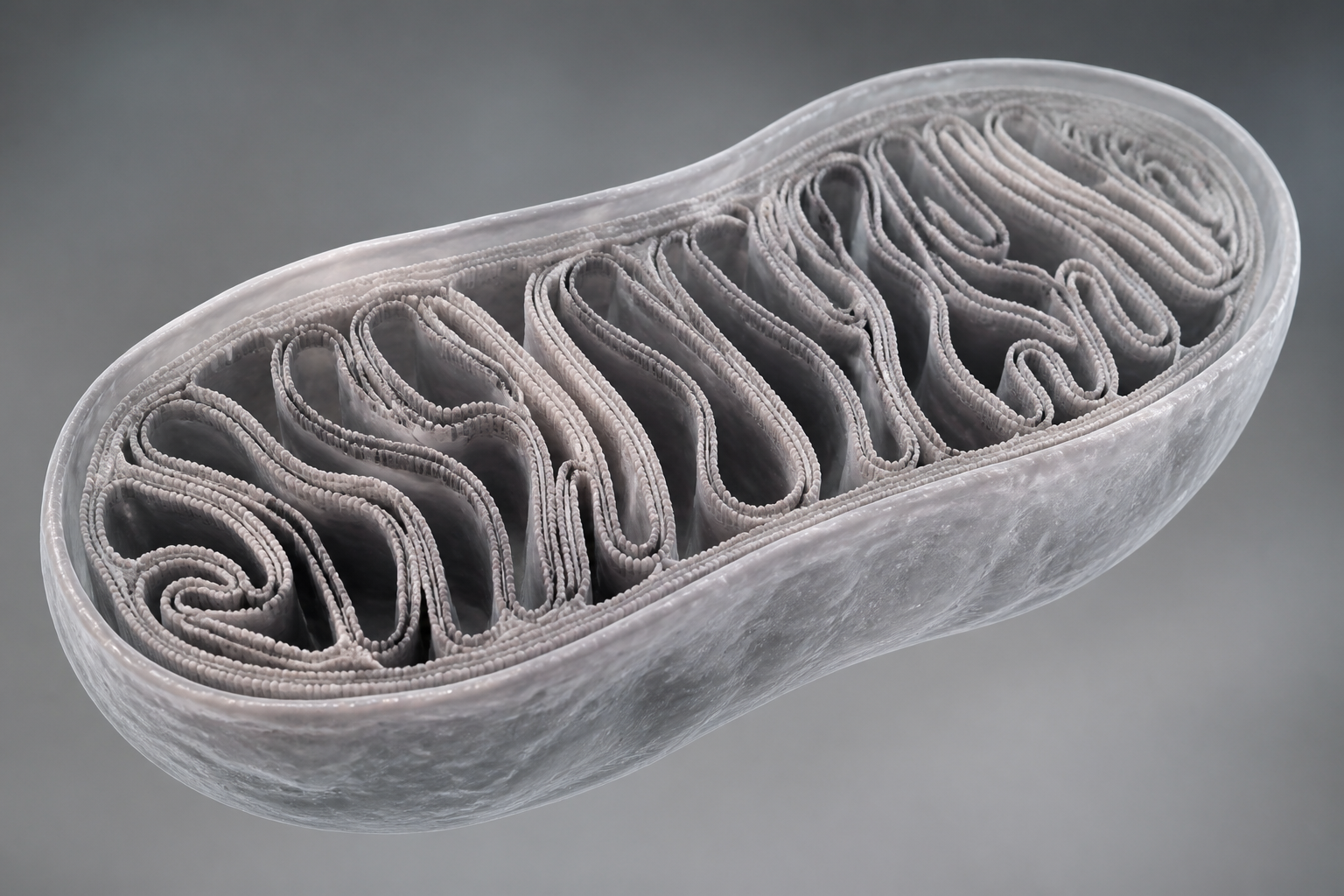
Mitchell, Ng, Tamucci, Boyd, and colleagues reported that SS-31 binds lipid bilayers and modulates surface electrostatics, using biophysical measurements rather than a use protocol (Mitchell et al., J Biol Chem, 2020, PMID 32273339). A 2022 structure–activity paper on mitochondria-targeted tetrapeptides compared SS-31 and analogues at the sequence level (Mitchell et al., eLife, 2022, PMID 35913044). Birk, Chao, Bracken, Warren, and colleagues discussed interaction with cardiolipin and the cytochrome c/cardiolipin complex in isolated mitochondria, with electron-transport readouts in that isolated-organelle system (Birk et al., Br J Pharmacol, 2014, PMID 24134698).
Those papers are peptide–lipid chemistry. They tell a laboratory how authors described bilayer binding and cardiolipin contacts. They are not specifications for an Axovera lot. Lot identity belongs on the certificate of analysis. See the COA library for current documentation.
Literature context — not product use. The findings below are those of the cited authors in their experimental systems. Axovera Labs does not manufacture, market, or sell products for diagnosis, treatment, cure, prevention, or any human or veterinary application.
Published experimental models
The 2004 Zhao paper includes isolated mitochondria, cultured-cell assays, and an animal reperfusion-injury arm. Routes, schedules, and amounts in that methods section are facts of that study. They are not directions for Axovera catalog items, which are not for animal or human use.
The 2020 and 2022 Mitchell papers stay on bilayer and analogue chemistry. The 2014 Birk paper reports isolated-mitochondria measurements of electron transport after the authors added the tetrapeptide to those preparations. Cultured-cell work exists in later papers; this review keeps the focus on sequence and membrane chemistry rather than disease models.
What this means for a research catalog
Taken together, the papers above support a narrow set of laboratory facts: SS-31 is discussed as the tetrapeptide D-Arg-Dmt-Lys-Phe-NH2; authors report inner-membrane targeting and lipid-bilayer binding; and published systems include isolated mitochondria, biophysical bilayer assays, and analogue SAR. They do not support a use, a protocol, or a human or veterinary application of any Axovera product.
Axovera Labs supplies SS-31 as a research material. See the SS-31 catalog listing for identity, size, and current documentation. Not for human or veterinary use.
The statements and information in this article have not been evaluated by the U.S. Food and Drug Administration. Products offered by Axovera Labs are intended strictly for laboratory research purposes only and are not intended to diagnose, treat, cure, or prevent any disease or medical condition. All products are supplied exclusively for in vitro and preclinical research applications and are not for human or veterinary use.